Helping You to Express the Music Within
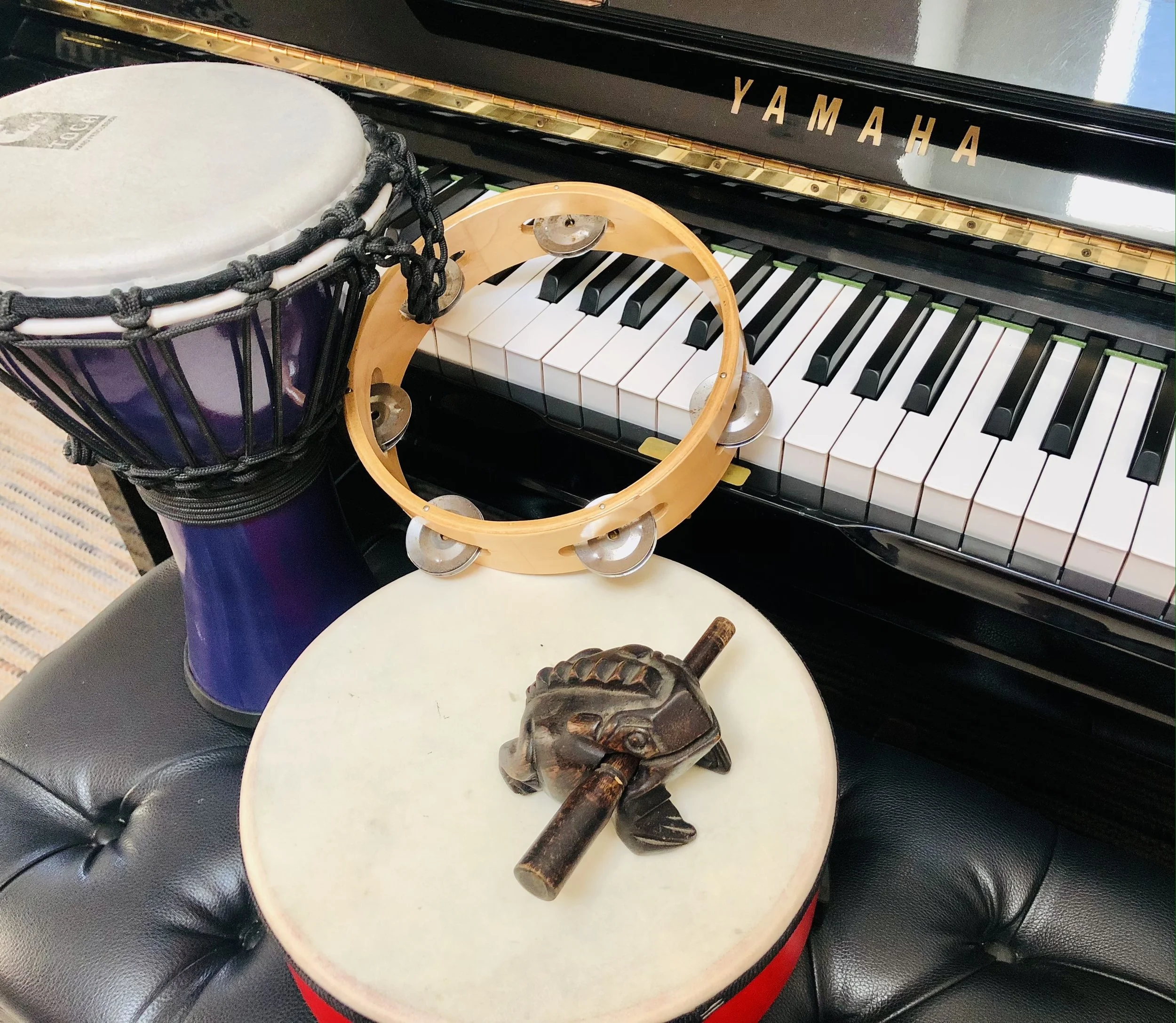
Insound Music Therapy is based in Walyalup (East Fremantle), Western Australia. We provide mobile music therapy services to areas south of the river, as well as from our home studio and online appointments.
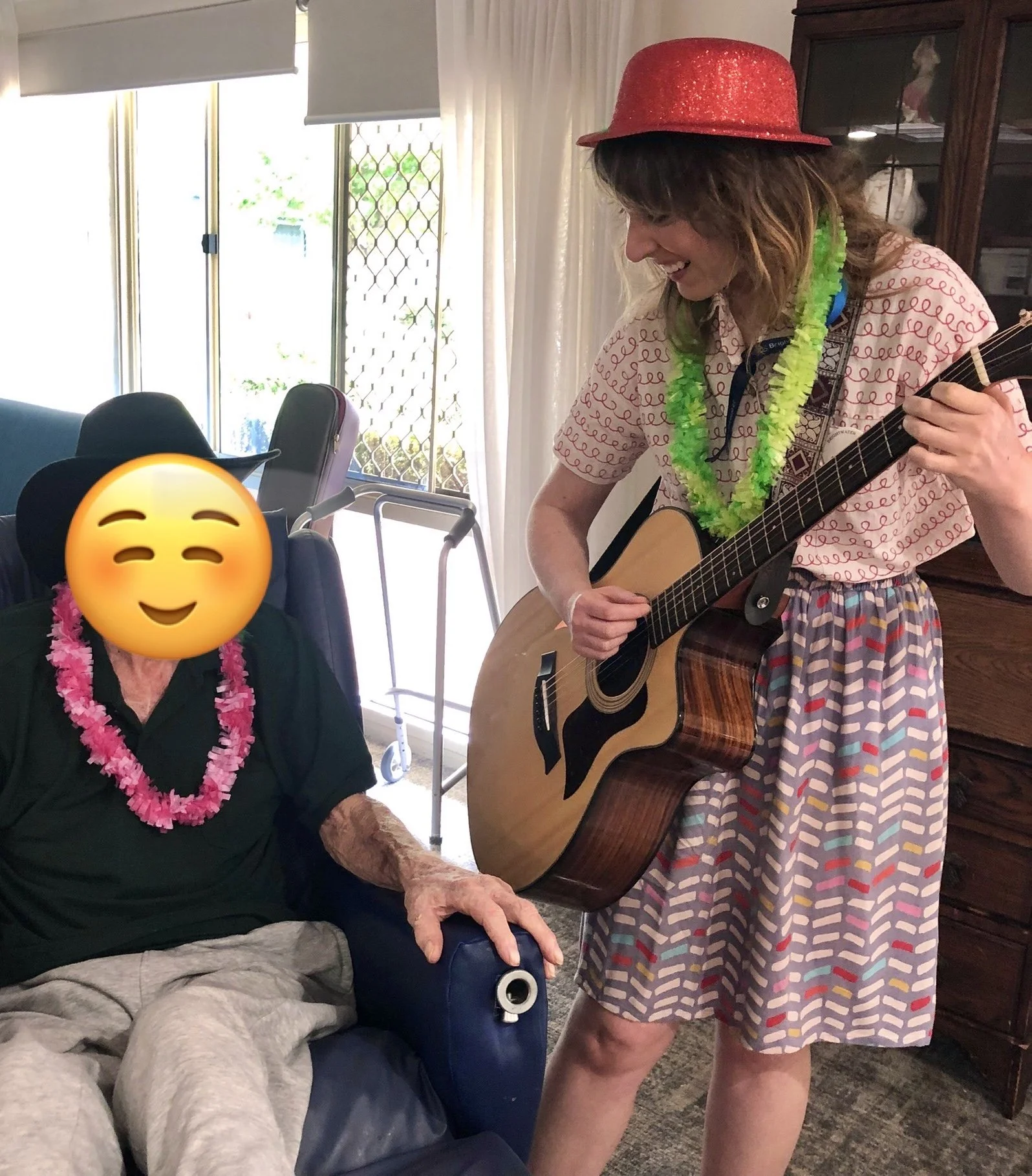
Insound specialises in music therapy within Residential Aged Care. Our Registered Music Therapist Anneke brings an energetic presence and a delight in the music of the Golden Years, delivering tailored music therapy programs for groups and individuals.
See below for a description of the services that Insound Music Therapy provides, or contact us directly to discuss what Insound may offer you or your organisation.
Anneke de Rooij is a trained Music Therapist registered with the Australian Music Therapy Association.
About Music Therapy
Music therapy is a research-based practice and profession in which music is used to support people as they strive to improve their health, functioning and well-being. Music therapists incorporate a range of music-making methods within and through a therapeutic relationship to address individual client goals (Allied Health Professions Australia, 2026). In Australia, music therapists are required to be registered with the Australian Music Therapy Association (AMTA).
-
Not at all – although we would argue that all human beings are born with innate musicality. Music therapy is not just for people who are “good” at music. It can benefit people of all ages, abilities and backgrounds, whose goals may be social, emotional, cognitive, communicative, functional or spiritual.
-
Music therapy methods in practice might look like:
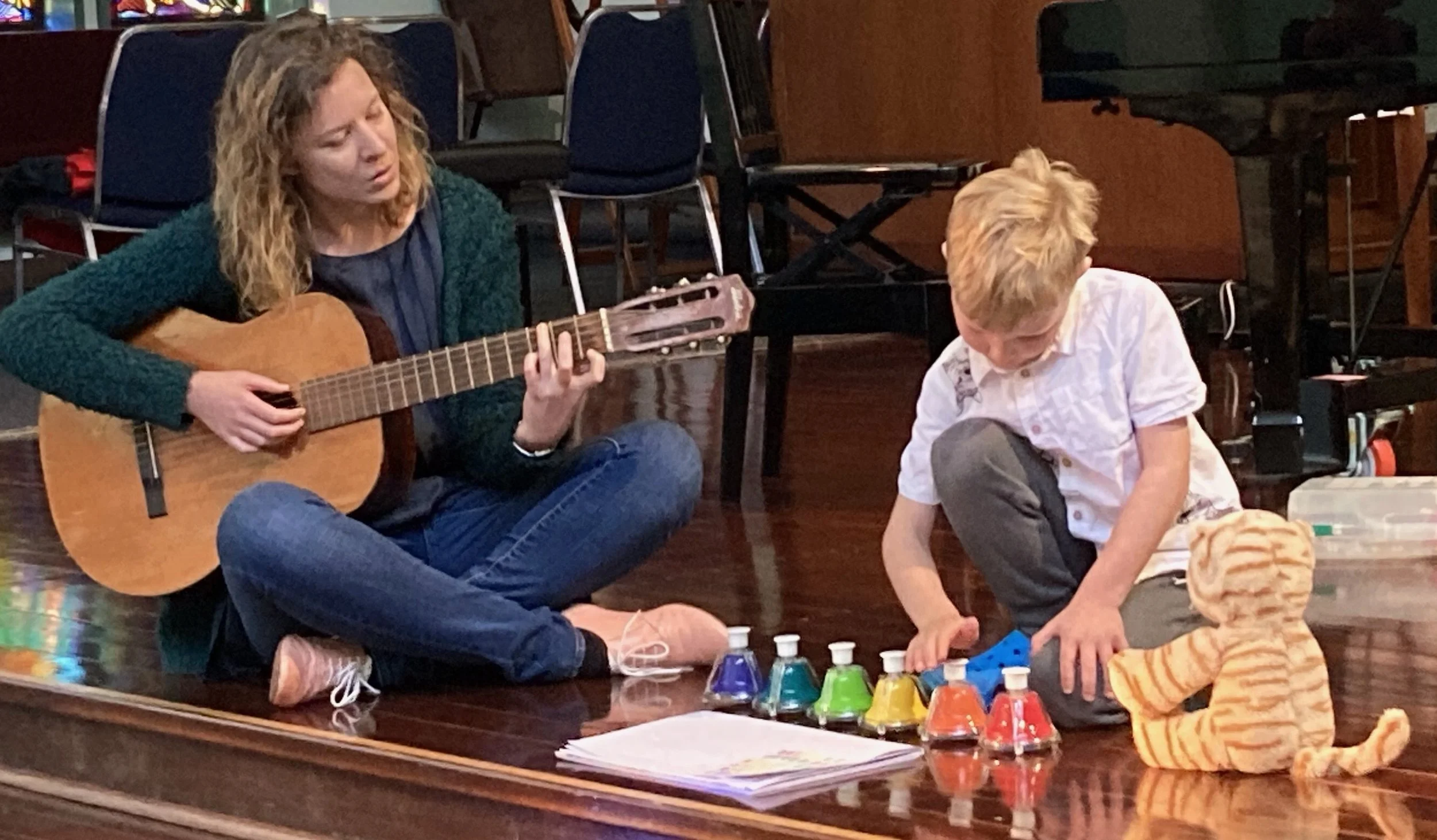
freely improvising with all sorts of musical instruments
writing original songs or lyrics
listening to music for relaxation and stress reduction
singing favourite songs that bring back memories and personal stories
making playlists to improve mood and motivation
exploring musical skills and interests in a safe and inclusive environment.
Music therapy has been scientifically proven to be effective, and can help when other,‘standard’ approaches such as talk therapy are ineffective. Through these musical methods, we are able to address a wide variety of goals, including:
social skills, such as capacity to tolerate change and uncertainty
mental health, such as processing grief, trauma or challenging negative self-talk
psychosocial needs, such as reconnection to memory, culture and self identity
cognition, including improving attention, memory, speech development and pattern recognition.
functional tools such as helping to structure daily tasks, and healthy ways to listen to music
physical goals, such as developing fine and gross motor skills
human rights and dignity, such as helping to improve accessibility to the profound sensory pleasure that music offers.
-
Both those things are fabulous, and can play a part in music therapy too! Music Therapists are trained to be targeted and strategic in their use of music. We are continuously evaluating, discussing and adjusting our methods, in order to help bring about the outcomes that our clients are after.
Most importantly, music therapy does not occur in isolation: it relies on building a therapeutic relationship between the client and the therapist, in which the client is supported to make discoveries, explore, share, rest and release.
-
All RMTs (Registered Music Therapists) are trained to use specific, research-based therapeutic techniques, but each RMT will have their own individual personality, values and experiences. At Insound Music Therapy, we have learned to prioritise the therapeutic power of relationships, in which the RMT trusts unconditionally in the client’s own agency. Feedback from staff, families and clients notes how our group sessions cultivate an atmosphere of energy, fun and inclusivity, with clients feeling valued for their contributions and simply for being there. Individual sessions allow participants to be heard and valued as their whole selves, in authentic connection with the music therapist. If this sounds like what you are looking for, Insound may be right for you.
-
This will depend on the intended outcomes of your sessions. Sessions may occur weekly, fortnightly or monthly. You may book just a handful of sessions, or continue for several months or years.
We aim to assist clients to build up their personal resources, such as their mental wellbeing, communication skills, or assisting to reach developmental milestones. Music therapists will regularly evaluate the progress of their clients’ goals, and may recommend concluding sessions once these goals have been achieved.
-
NDIS pricing is an hourly rate of $150. Non-session hours, for example report writing or preparation of materials (e.g. songwriting) will be charged at an hourly and pre-arranged fee.
Non-NDIS client rate is $120 per hour.
Group sessions within organisations are charged at $160 per hour.
Travel fees apply when travel time exceeds a total of 30 minutes.
Insound Music Therapy Services
-
Group or individual sessions for residential aged care, disability organisations, early childhood groups and community support services.
Duration: 45 mins - 1 hour for group sessions, 30 mins - 1 hour for individual sessions.
Cost: $160 per hour for group sessions. For daily rates please contact us to discuss what best suits your organisation.
Music Therapy for Organisations
In-Home Appointments
-
Music therapy sessions for individuals held in the comfort of your own home. Servicing Fremantle area and surrounds.
Duration: 30 mins - 1 hour.
Cost: $150 hourly rate for NDIS participants.
$120 hourly rate for private clients.
Travel fees may apply.
-
Individual music therapy sessions in our East Fremantle home studio. Please note that the studio is not currently wheelchair accessible, we apologise for this inconvenience.
Duration: 30 mins - 1 hour
Cost: $150 hourly rate for NDIS participants.
$120 hourly rate for private clients.
In-Studio Appointments

-
For those living further afield or who find online methods more accessible, online appointments can delivered via Zoom or FaceTime.
Duration: 45 mins - 1 hour
Cost: $150 hourly rate for NDIS participants.
$120 hourly rate for private clients.
Online Appointments
Meet Anneke de Rooij, director of Insound Music Therapy
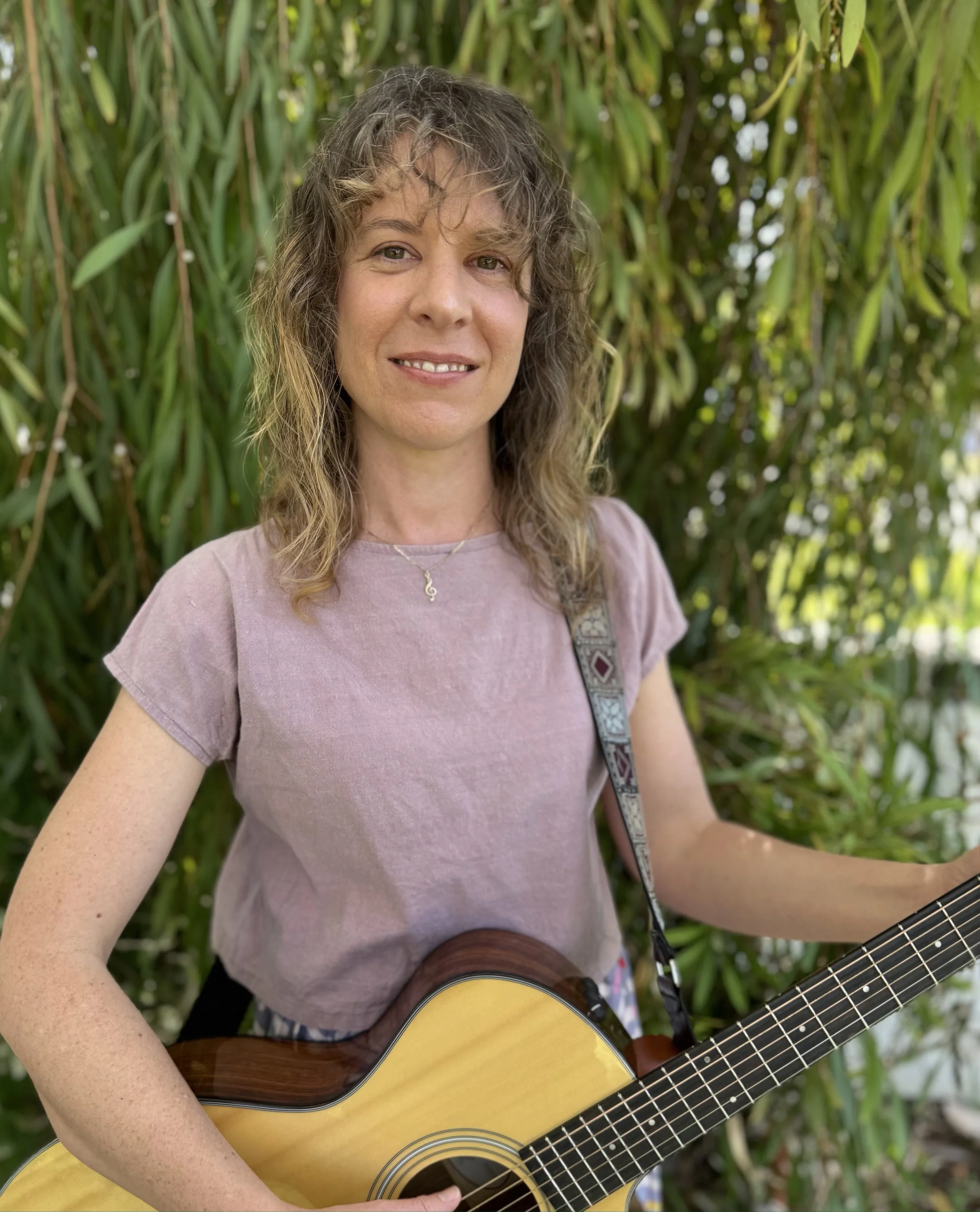
From early childhood, I was splashing about in the river of music. I was a shy kid, but playing the piano gave me a special skill that was my own and made me feel like “me”. Meanwhile, my mother was the director of a large community choir called Sing From The Heart. I saw how singing together brought meaning, friendship and pleasure to people of all ages.
As a young person, going to gigs and being involved in the local Perth music scene formed an important part of my self-identity. Music helped me to meet people, find common interests and express thoughts and big feelings in a way that was “acceptable” and safe.
A piano teacher for almost 20 years, I trained in the Suzuki method of early childhood holistic learning. This grounding has given me the firm belief that musicality is within all of us regardless of our differences, and we all deserve the opportunity to express and enjoy music. Wanting to explore the therapeutic potential of music beyond the teaching studio, I began to search for other pathways…and found Music Therapy.
I graduated with a Masters of Music Therapy from the University of Melbourne in 2024. I am now privileged to work in aged care and disability support. I am especially passionate about music therapy with older adults, and I love the music of the 50s, 60s and 70s.
Contact Insound Music Therapy
Contact us today to discuss how music therapy could benefit you or your organisation. Please allow for up to 3 business days for a reply.
Appointments are currently available between 8am - 12pm on Mondays, Tuesdays and Fridays.
“Music, the most abstract and uncanny art, is an eternal river of sound moving through time. We can free ourselves from whatever may be holding us back, and join that flowing river. ”